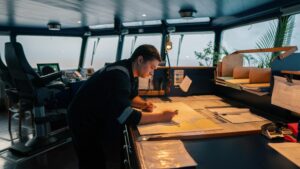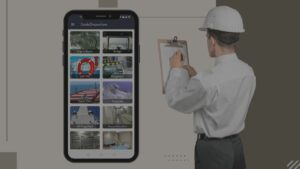

In the maritime world, evaluating crew skills has always been a pivotal task. Whether to assess eligibility for a promotion or a new hire, evaluations remain a crucial task that would eventually determine the reputation and performance standards on board vessels. To address this need, a series of Gamified Evaluation modules were created.
Dynamic and Engaging Assessments
No more mundane evaluation forms! Gamified modules make the assessment process not just efficient but also engaging for the crew. Its evaluation is designed to feel less like a test and more like a game. An engaged crew is a motivated crew. Transforming evaluations into interactive experiences can drastically uplift the spirits and enthusiasm of crew members. Click below to check it out.
Spot-on Skill Measurement
The precision in these modules ensures that every aspect of a crew member’s abilities is gauged. No stone is left unturned, ensuring thoroughness in the evaluation process.
Personalized Feedback Mechanism
Beyond just assessing, these modules offer insights. Every crew member receives feedback tailored to their performance, guiding them toward areas of improvement.
Expansive Scope and Scale
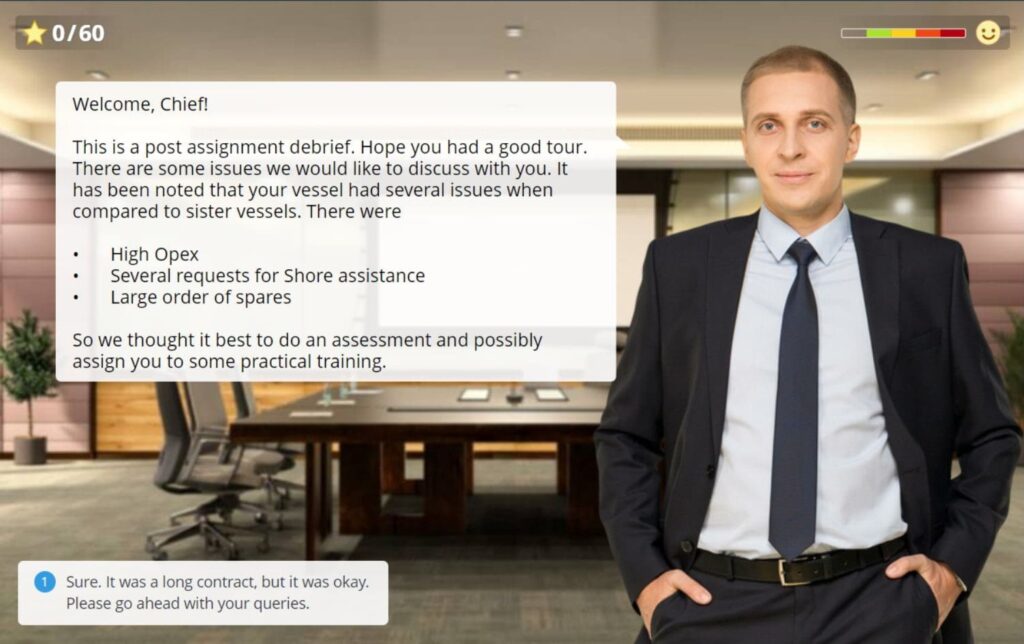
One of the highlights of our system is its scalability. Whether it’s a small team or an entire fleet, gamified evaluations are adaptable and all-encompassing. We have a set of over 100 modules tailored to various ranks and various skill levels.
The Larger Picture
Beyond the immediate efficiency and engagement perks, there’s a bigger horizon. Enhanced crew evaluations can lead to safer, more competent maritime operations, setting new benchmarks for the industry.
The course of Crew Evaluation is shifting. It’s time to embrace this refreshing tide and sail towards a brighter maritime future!